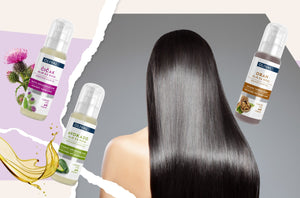

Frizz is most often recognized by unruly, disheveled hair that sticks out and looks dry or messy. It occurs when hair lacks moisture and tries to absorb it from the air, which results in frizz and the creation of electricity. In addition to a lack of moisture, frizz is also significantly affected by the porosity of the hair. The more porous the hair, the easier it loses and absorbs moisture from the environment, making it more prone to frizz. It is more pronounced in the fall and winter because cold air and wind outside and dry, warm air in heated spaces further dry out the hair. However, with these 7 tricks, tips (and products), we can alleviate hair frizz.
1. Get rid off split ends
Split ends damage hair by expanding and making it less able to retain natural moisture, which further increases frizz. While there are products that can temporarily reduce the appearance of split ends, the long-term solution is to get regular haircuts. In between visits to the hairdresser, nourishing oils or serums can be applied to help prevent breakage and retain moisture.
2. Don't wash your hair with hot water
While a hot shower can be relaxing, it can strip your scalp and hair of the natural oils that keep them hydrated and shiny. This lack of moisture can lead to increased frizz. Warm or lukewarm water is optimal for washing your hair.

3. Choose a shampoo for your hair (and scalp) type
Choosing the right shampoo is key to starting any routine. For dry, porous or treated hair, mild, hydrating, sulfate-free shampoos like Amla and Probiotic shampoos will work. For strengthening hair and stimulating growth, Castor Oil shampoo is a great choice. Based on castor oil and enriched with panthenol, it strengthens the hair structure, nourishes the scalp and prevents dryness. Many people will benefit from rotating their shampoos. Use gentle sulfate-free shampoos, and every third or fifth wash, add a sulfate-based shampoo to deep-clean the scalp. This removes accumulated impurities without over-drying the hair. Apply the shampoo only to the scalp and massage to create a lather. The remaining lather that flows down the length will sufficiently cleanse the ends without unnecessary drying.
4. Restore vitality with hair conditioner
Conditioner is not just additional hydration. We can think of it as textile care. Just as fabric softener softens fibers and smoothes fabric, conditioner smoothes the hair cuticle and gives it suppleness. Hibiscus extract is rich in natural acids and antioxidants that stimulate hair renewal, restore elasticity and prevent breakage. Combined with the natural oils in Hibiscus Hair Conditioner, it helps soften, smooth and nourish hair. Apply conditioner from the middle of the hair to the ends and leave it to work for a few minutes before rinsing. Avoid applying conditioner to the roots of the hair. This makes the hair even heavier, and can lead to clogged follicles and hair loss.

5. Gently towel dry your hair
When drying your hair, avoid rubbing it roughly. Wet hair is more fragile and can easily become damaged, broken, and tangled. Instead, gently pat your hair with a soft microfiber cloth or wrap it in a turban. A good trick is to wrap your hair in a cotton t-shirt instead of a towel.
6. Apply leave-in treatment
Hair sometimes requires additional care. Leave-in products are the key to preventing frizz. They create a protective layer that prevents moisture loss and makes hair less porous. Amodimethicone, a new generation silicone that selectively binds to damaged areas of the hair, succeeds best in this. In the Hibiscus 3in1 Leave-In Hair Mask, it reduces frizz, contributes to shine and softness, and helps protect hair from heat treatment and damage. The mask is applied to damp hair and makes combing easier without feeling heavy or greasy.
For final shine and additional protection, silicone serums are optimal. SILK ON silicone serum creates a waterproof film that prevents moisture loss and makes it less porous. A few drops are enough to care for the tips and length.

7. Minimize heat damage
Hair straighteners, curling irons, and powerful blow dryers can seriously damage your hair's structure, making it dry, brittle, and more prone to frizz. That's why it's important to apply a heat protectant before styling and turn down the heat setting to the lowest, most effective setting. Whenever possible, it's a good idea to limit the frequency of heat styling and focus on caring for and repairing your hair.